How do cells stay the right size?
Cells maintain an appropriate size to carry out their specialized functions. To maintain their size, most cells coordinate cell growth with cell division, typically growing to a certain size before dividing.
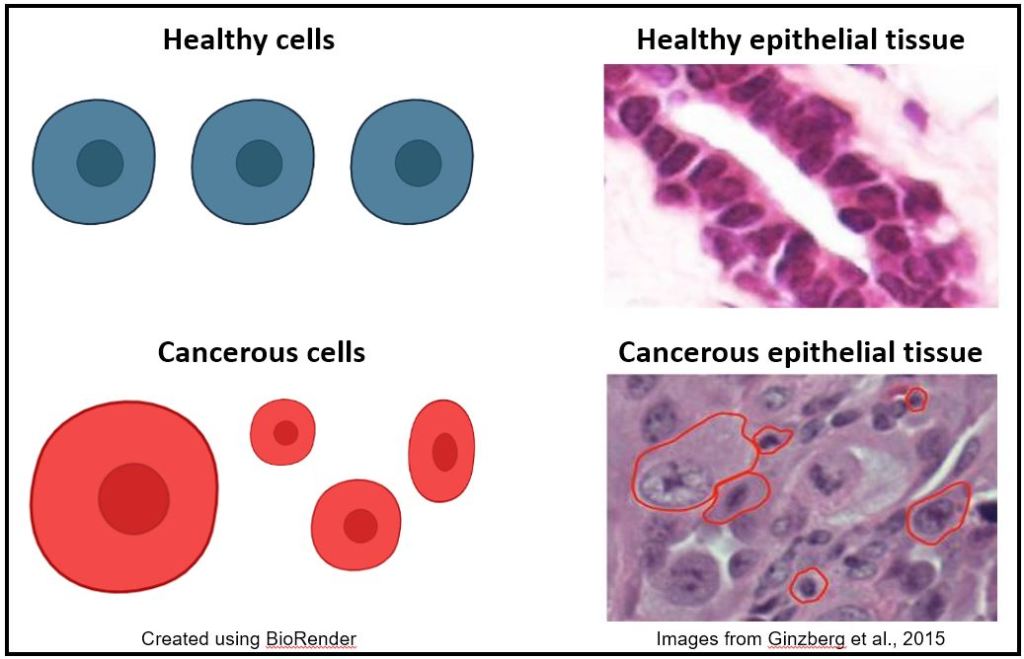
When cell size control fails, cells can become abnormally large or small, a hallmark of many cancers (see figure, right). Understanding the mechanisms that regulate cell size is therefore critical for understanding both normal cell function and cancer.
This raises one of the most fundamental questions in biology: How do cells measure their own size? Despite decades of research, the molecular mechanisms that allow cells to sense their size and what aspect of cell geometry they monitor (length, SA, Vol) remain poorly understood.
How do cells adjust their size to changing environments?
Cells do not exist in constant environments. Within tissues, they continuously experience changes in nutrient availability, oxygen levels, osmotic conditions, and other extracellular signals that influence their growth and proliferation. These environmental fluctuations are especially common within the tumor microenvironment, where they can profoundly alter cell behavior. Yet while environmental conditions have long been known to influence cell size, how cells modify their cell size control mechanisms in response to these changing conditions have remained unclear.
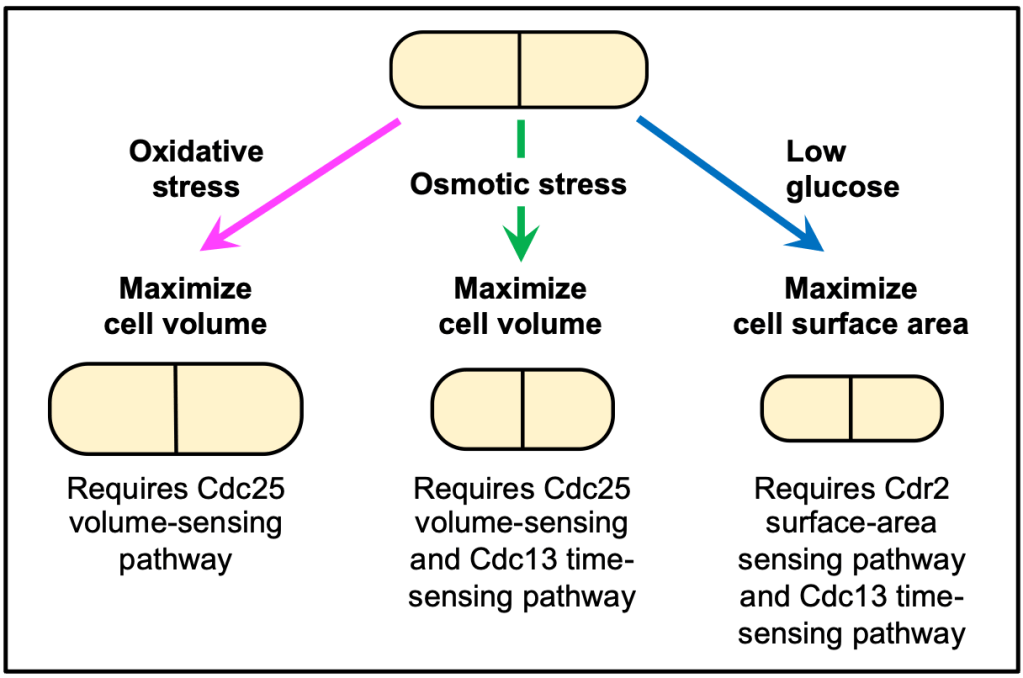
Our recent work (Cabral et al., 2026, Molecular Biology of the Cell) demonstrated that cell size control is remarkably flexible. Rather than relying on a fixed regulatory network, cells actively remodel the signaling pathways that regulate cell size in response to different environmental conditions, producing distinct cell geometries (See Figure Right). These findings reveal that environmental signals can reshape conserved cell size control networks, providing a new framework for understanding how cells coordinate growth with cell division in changing environments.
The Miller Lab is investigating the molecular mechanisms by which environmental signals reshape conserved cell size control networks.
Why Fission Yeast?
We use the fission yeast Schizosaccharomyces pombe as a model organism because many of the core proteins and signaling pathways that regulate cell growth and division are highly conserved between yeast and humans. Its simple rod-shaped geometry and rapid cell cycle make it ideally suited for quantitative live cell microscopy, enabling precise measurements of cell size and growth. Extensive genetic resources also allow us to easily manipulate genes and integrate tags to visualize proteins, providing a powerful system for uncovering the molecular mechanisms that regulate cell size.
Our Approach
To uncover the mechanisms that regulate cell size, we integrate a range of interdisciplinary approaches.
Fission Yeast Genetics – We leverage the powerful genetics of Schizosaccharomyces pombe to identify and manipulate conserved regulators of cell growth, division, and size.
Biochemistry & Cell Biology – We combine biochemical and cell biological approaches to investigate the molecular mechanisms that coordinate cell growth with cell division.
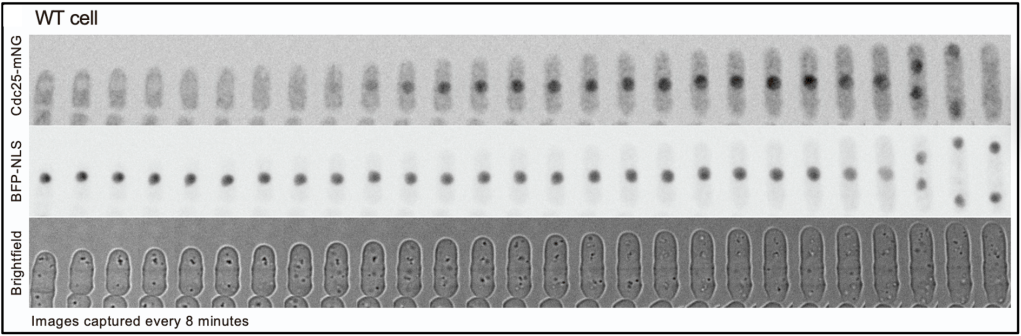
Live Cell Microscopy – We use spinning disk confocal microscopy to visualize protein localization, dynamics, and cell size and growth in living cells with high spatial and temporal resolution.
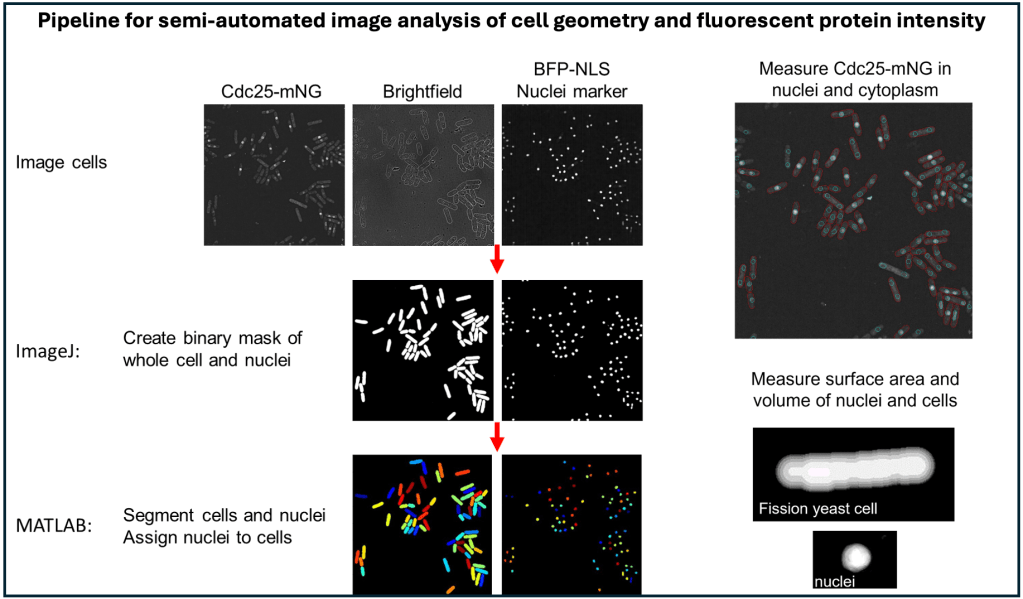
Computational Image Analysis – We utilize semi-automated image analysis pipelines to quantify cell size, protein abundance, subcellular localization, and growth dynamics from thousands of individual cells.
Join the Miller Lab
The Miller Lab welcomes motivated students who are excited about cell biology and scientific discovery.
Interested? Email Dr. Miller at kmille25@providence.edu to learn about current research opportunities.
 Kristi MILLER LAB